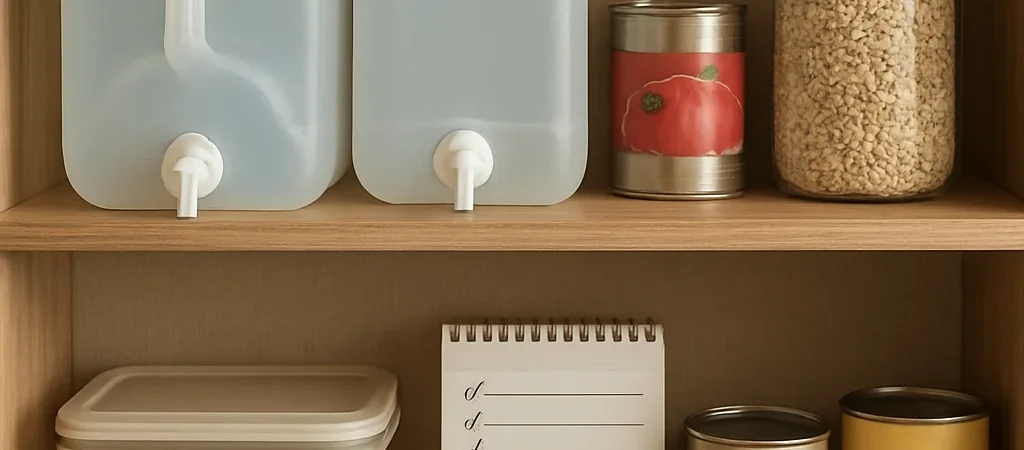
A shelf full of food can look reassuring until you realize the meals need water, cooking time, or equipment you do not have. Plan food and water together, using meals your household already recognizes as a starting point. The goal is a practical reserve that fits your family, not an impressive stack of cans.
Choose Food You Will Use
List a week of ordinary breakfasts, lunches, and dinners, then identify shelf-stable versions your household enjoys. Canned beans, vegetables, fruit, soups, crackers, oats, and nut or seed butters can be useful depending on dietary needs and storage conditions. Include foods that need little or no cooking, and check whether your plan depends on a can opener, extra fuel, or a particular appliance.
Count Water Beyond Drinking
Water is needed for drinking, food preparation, and basic hygiene, so a meal plan should not assume every stored gallon is available for cooking. Estimate needs for everyone in the household, including pets, and follow current local emergency-management guidance for recommended amounts. Store water in food-grade containers in a cool, dark place, and never reuse containers that held chemicals.
Rotate and Practice the Plan
Put newer food behind older food and use items during normal meals before they pass their labeled dates or lose quality. Keep a written inventory and note any special dietary requirements, such as allergy-safe options or infant feeding supplies. Try preparing one planned meal without your usual kitchen setup; the exercise will show whether you need simpler foods, a safe cooking alternative, or more water on hand.